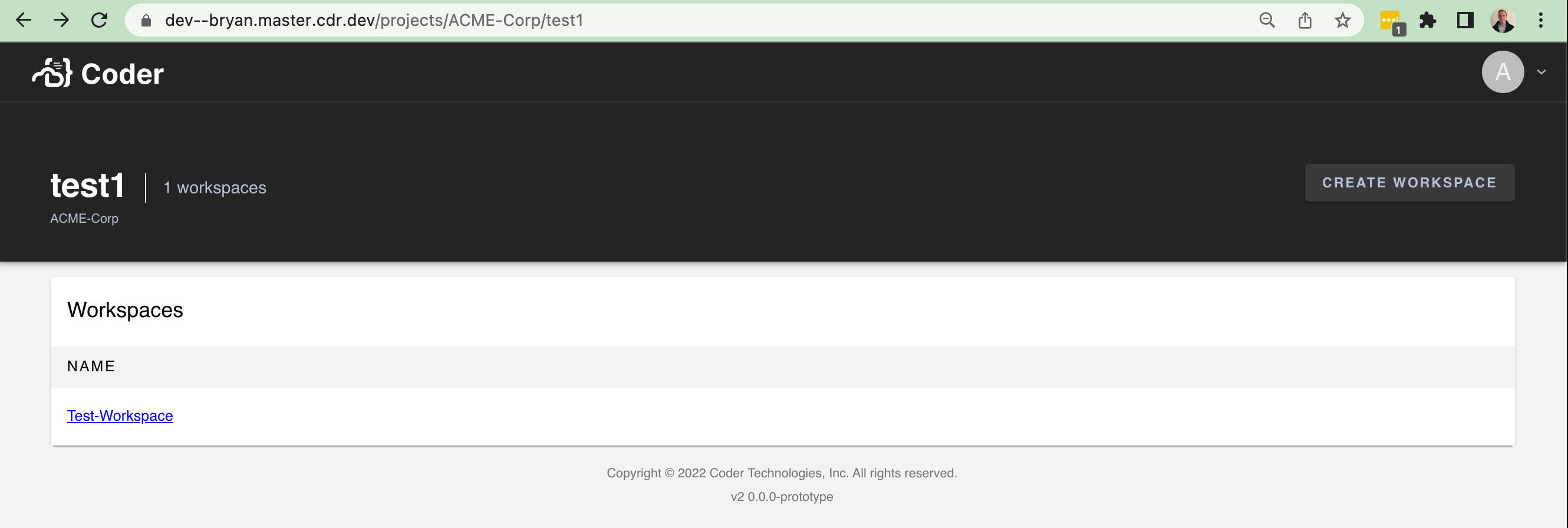
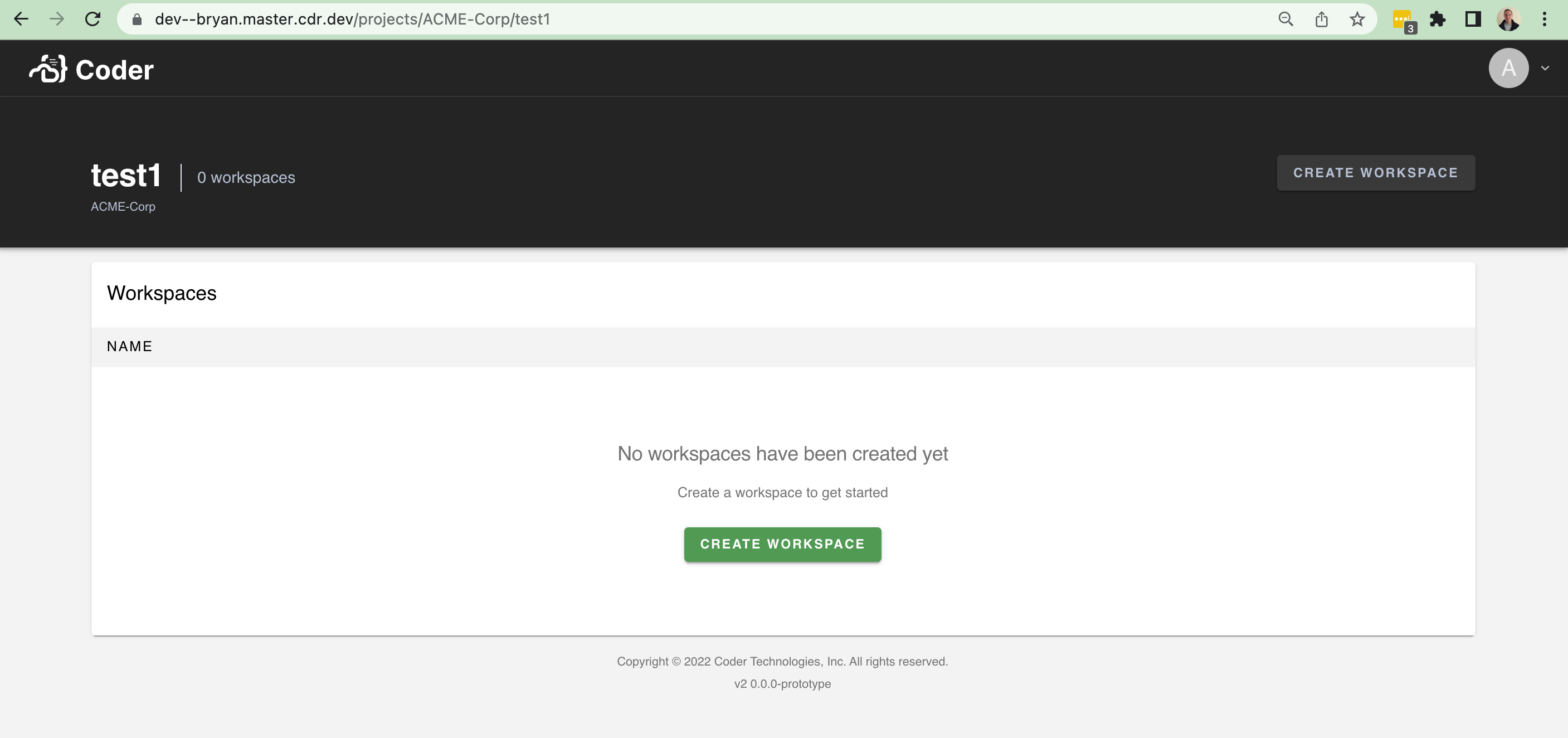
Unfortunately along with #133 I missed one other item in moving files to `/site` in #128 - ignoring new configuration files (and other folders) in our `jest.config.js`.

This caused our coverage numbers in front-end code to dip, because files that shouldn't be included (and previously weren't included) were now being tracked for coverage.
Missed in #128 - need to update the `dependabot.yml` to point to the correct package.json, which was moved from `/package.json` -> `/site/package.json`
* feat: Add history middleware parameters

These will be used for streaming logs, checking status,
and other operations related to workspace and project
history.

* refactor: Move all HTTP routes to top-level struct

Nesting all structs behind their respective structures
is leaky, and promotes naming conflicts between handlers.

Our HTTP routes cannot have conflicts, so neither should
function naming.
This refactors the front-end collateral to all live within `site` - so no `package.json` at the root.

The reason we had this initially is that the jest test run and NextJS actually require having _two_ different `tsconfig`s - Next needs `jsx:"preserve"`, while jest needs `jsx:"react"` - we were using `tsconfig`s at different levels at the hierarchy to manage this.

I changed this behavior to still use two different `tsconfig.json`s, which is mandatory - but just side-by-side in `site`.

Once that's fixed, it was easy to move everything into `site`

Follow up from: https://github.com/coder/coder/pull/118#discussion_r796244577
This brings an async service that parses and
provisions to life! It's separated from coderd
intentionally to allow for simpler testing.

Integration with coderd will come in another PR!
@kylecarbs and I were debugging a gnarly postgres issue over the weekend, and unfortunately it looks like it is still coming up occassionally: https://github.com/coder/coder/runs/5014420662?check_suite_focus=true#step:8:35 - so thought this might be a good testing Monday task.
Intermittently, the test would fail with something like a `401` - invalid e-mail, or a `409` - initial user already created. This was quite surprising, because the tests are designed to spin up their own, isolated database.
We tried a few things to debug this...
## Attempt 1: Log out the generated port numbers when running the docker image.
Based on the errors, it seemed like one test must be connecting to another test's database - that would explain why we'd get these conflicts! However, logging out the port number that came from docker always gave a unique number... and we couldn't find evidence of one database connecting to another.
## Attempt 2: Store the database in unique, temporary folder.
@kylecarbs and I found that the there was a [volume](https://github.com/docker-library/postgres/blob/a83005b407ee6d810413500d8a041c957fb10cf0/11/alpine/Dockerfile#L155) for the postgres data... so @kylecarbs implemented mounting the volume to a unique, per-test temporary folder in https://github.com/coder/coder/pull/89
It sounded really promising... but unfortunately we hit the issue again!
### Attempt 3... this PR
After we hit the failure again, we noticed in the `docker ps` logs something quite strange:

When the docker image is run - it creates two port bindings, an IPv4 and an IPv6 one. These _should be the same_ - but surprisingly, they can sometimes be different. It isn't deterministic, and seems to be more common when there are multiple containers running. Importantly, __they can overlap__ as in the above image.
Turns out, it seems this is a docker bug: https://github.com/moby/moby/issues/42442 - which may be fixed in newer versions.
To work around this bug, we have to manipulate the port bindings (like you would with `-p`) at the command line. We can do this with `docker`/`dockertest`, but it means we have to get a free port ahead of time to know which port to map.
With that fix in - the `docker ps` is a little more sane:

...and hopefully means we can safely run the containers in parallel again.
Use the native 'concurrency' configuration feature to cancel
concurrent builds, rather than the cancel-workflow-action.
This also allows us to reduce permissions for the workflow.
* fix: Synchronize peer logging with a channel

We were depending on the close mutex to properly
report connection state. This ensures the RTC
connection is properly closed before returning.

* Disable pion logging

* Remove buffer

* Try ICE servers

* Remove flushed

* Add diagram explaining handshake

* Fix candidate accept ordering

* Add debug logging to peerbroker

* Fix send ordering

* Lock adding ICE candidate

* Add test for negotiating out of order

* Reduce connection to a single negotiation channel

* Improve test times by pre-installing Terraform

* Lock remote session description being applied

* Organize conn

* Revert to multi-channel setup

* Properly close ICE gatherer

* Improve comments

* Try removing buffered candidates

* Buffer local and remote messages

* Log dTLS transport state

* Add pion logging
Having a mixture of abbreviations in the codebase reduces
clarity. Although opts is common for options, I'd rather
set a precedent of clarifying verbosity.
When using parallel before, multiple PostgreSQL containers would
unintentionally interfere with the other's data. This ensures
both containers have separated data, and don't create a volume.

🌮 @bryphe-coder for the idea!
* feat: Add parameter and jobs database schema

This modifies a prior migration which is typically forbidden,
but because we're pre-production deployment I felt grouping
would be helpful to future contributors.

This adds database functions that are required for the provisioner
daemon and job queue logic.

* feat: Compute project build parameters

Adds a projectparameter package to compute build-time project
values for a provided scope.

This package will be used to return which variables are being
used for a build, and can visually indicate the hierarchy to
a user.

* Fix terraform provisioner

* feat: Add provisionerd protobuf definitions

Provisionerd communicates with coderd over a multiplexed
WebSocket serving dRPC. This adds a roughly accurate protocol
definition.

It shares definitions with "provisioner.proto" for simple
interop with provisioners!
* feat: Add parameter and jobs database schema

This modifies a prior migration which is typically forbidden,
but because we're pre-production deployment I felt grouping
would be helpful to future contributors.

This adds database functions that are required for the provisioner
daemon and job queue logic.

* feat: Compute project build parameters

Adds a projectparameter package to compute build-time project
values for a provided scope.

This package will be used to return which variables are being
used for a build, and can visually indicate the hierarchy to
a user.

* Fix terraform provisioner

* Improve naming, abstract inject to consume scope

* Run CI on all branches
* feat: Add parameter and jobs database schema

This modifies a prior migration which is typically forbidden,
but because we're pre-production deployment I felt grouping
would be helpful to future contributors.

This adds database functions that are required for the provisioner
daemon and job queue logic.

* Add comment to acquire provisioner job query

* PostgreSQL hates running in parallel
* chore: Update pion/ice fork to resolve goroutine leak

* Flush remote too

* Add logs for setting the description

* Try locking only on remote

* Remove local bufferring in favor of remote

* Remove unused flush func

* Set candidates flushed to true

* Defer flush until the end of negotiation

* Buffer ICE candidates

* Add comment clarifying channel buffer

* Flush after handshake

* Move away from fork

* Ignore pion/ice leaks
* chore: Buffer remote candidates like local

This was added for local candidates, and is required for remote
to prevent a race where they are added before a negotiation is
complete.

I removed the mutex earlier, because it would cause a different race.
I didn't realize the remote candidates wouldn't be buffered,
but with this change they are!

* Use local description instead

* Add logging for candidate flush

* Fix race with atomic bool

* Simplify locks

* Add mutex to flush

* Reset buffer

* Remove leak dependency to limit confusion

* Fix ordering

* Revert channel close

* Flush candidates after remote session description is set

* Bump up count to ensure race is fixed

* Use custom ICE dependency

* Fix data race

* Lower timeout to make for fast CI

* Add back mutex to prevent race

* Improve debug logging

* Lock on local description

* Flush local candidates uniquely

* Fix race

* Move mutex to prevent candidate send race

* Move lock to handshake so no race can occur

* Reduce timeout to improve test times

* Move unlock to defer

* Use flushed bool instead of checking remote
* chore: Fix race in collecting ICE Candidates

This logic was flawed previously. ICE Candidates could collect
before a negotiation was triggered, which led to a race where
candidates would be lost. Candidates can no longer be lost,
and we removed some code 😎.

* Add comment describing fix

* Use upstream dependency to fix goroutine leak

* Use upstream dependency to fix goroutine leak
Previously, there was a pseudo-workspaces page that was leftover from prototyping, but doesn't make sense in the revised flow.
Now, we have a `/projects` page, and after logging in, the user should be taken to that page:
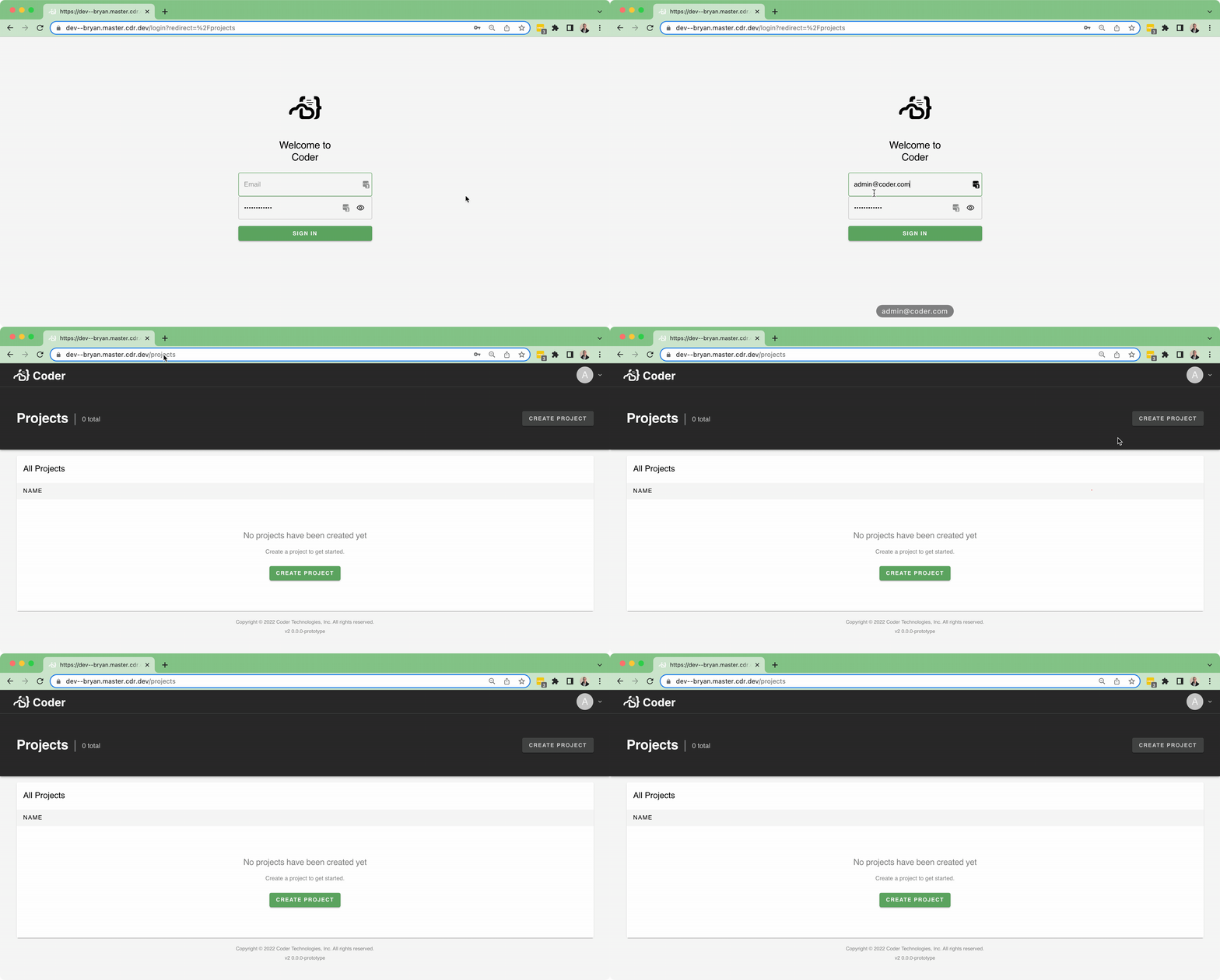
This implements a client-side redirect to land on our `/projects` route.
 Kyle Carberry