Enforces a consistent test package layout.
This makes it difficult to test internal
functionality, which I believe promotes
healthy decomposition, and minimal package
exports.
This hooks up `storybook`, which the front-end team has enjoyed using in the v1 codebase - it makes it quick and easy to view and test components in isolation.
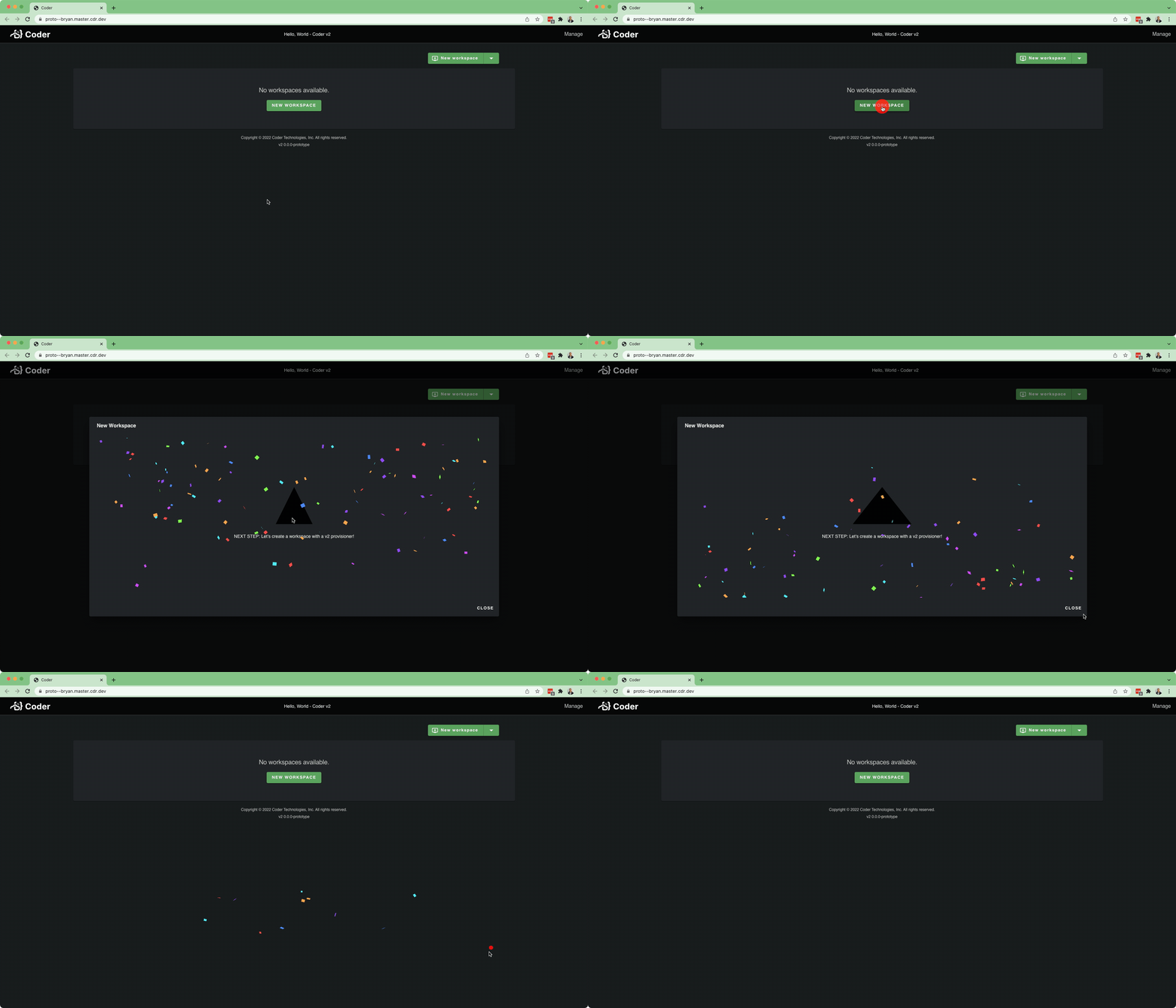
The `<LoadingButton />` has a simple story added now, so if you run `yarn storybook`, you can preview it in various states:

This will be helpful as we bring more front-end devs to help build v2 out.
Unfortunately along with #133 I missed one other item in moving files to `/site` in #128 - ignoring new configuration files (and other folders) in our `jest.config.js`.

This caused our coverage numbers in front-end code to dip, because files that shouldn't be included (and previously weren't included) were now being tracked for coverage.
This refactors the front-end collateral to all live within `site` - so no `package.json` at the root.

The reason we had this initially is that the jest test run and NextJS actually require having _two_ different `tsconfig`s - Next needs `jsx:"preserve"`, while jest needs `jsx:"react"` - we were using `tsconfig`s at different levels at the hierarchy to manage this.

I changed this behavior to still use two different `tsconfig.json`s, which is mandatory - but just side-by-side in `site`.

Once that's fixed, it was easy to move everything into `site`

Follow up from: https://github.com/coder/coder/pull/118#discussion_r796244577
Previously, there was a pseudo-workspaces page that was leftover from prototyping, but doesn't make sense in the revised flow.
Now, we have a `/projects` page, and after logging in, the user should be taken to that page:
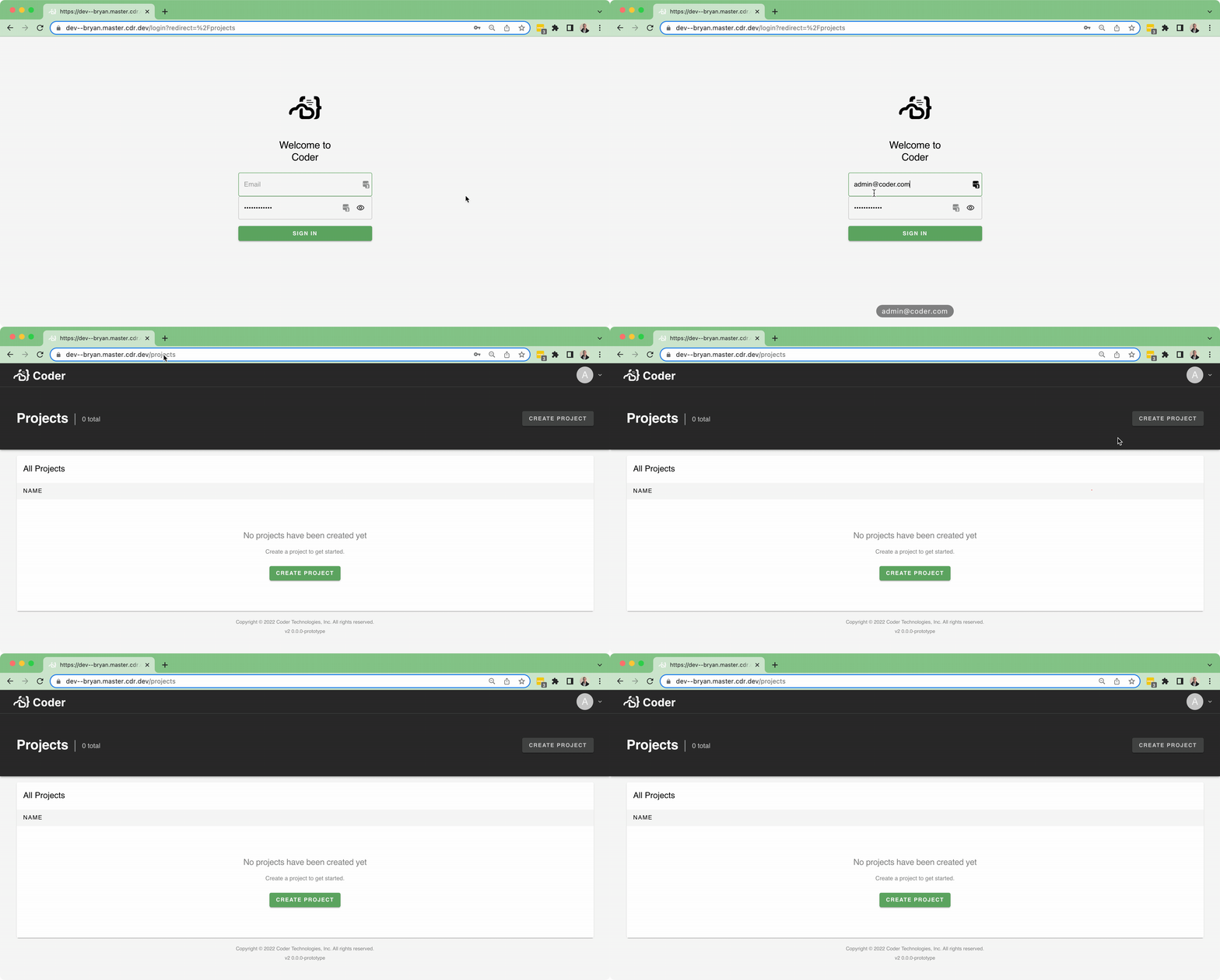
This implements a client-side redirect to land on our `/projects` route.
Prompted from discussion here: https://github.com/coder/coder/pull/60/files#r792124373

Our current FormTextField implementation requires a [higher-order component](https://reactjs.org/docs/higher-order-components.html), which can be complicated to understand.

This experiments with moving it to not require being a HoC.

The only difference in usage is that sometimes, you need to provide the type like `<FormTextField<FormValues> form={form} formFieldName="some-field-in-form" />` - but it doesn't require special construction.
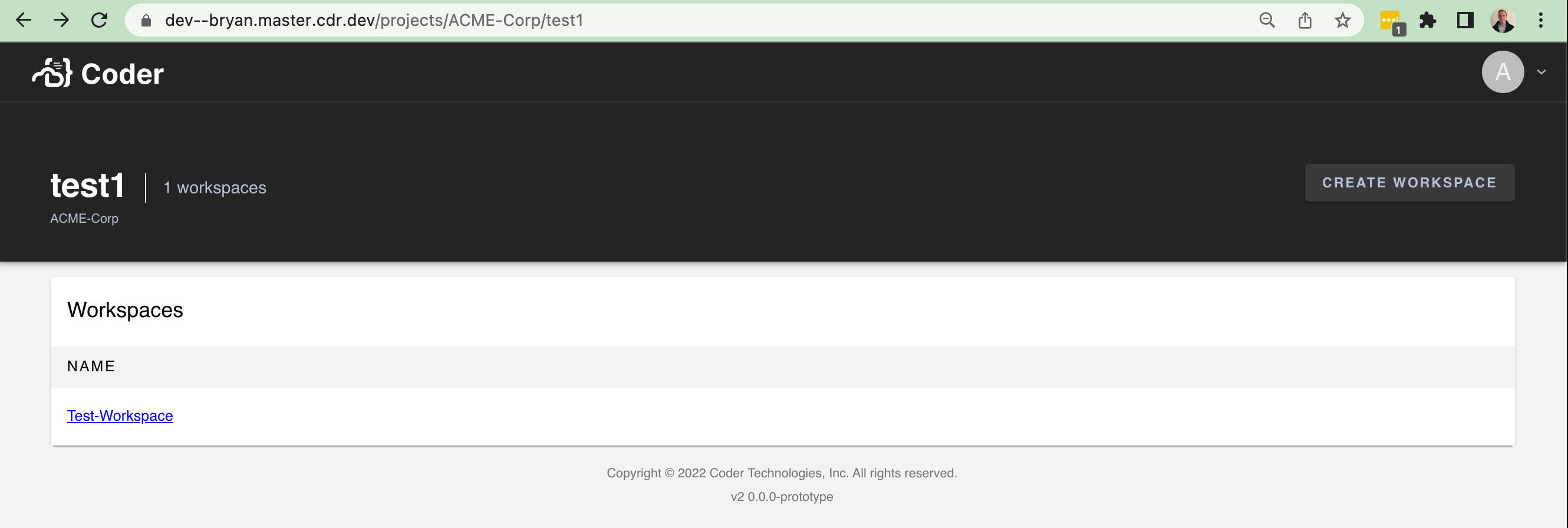
This implements a simple Project listing page at `/projects` - just a table for a list of projects:
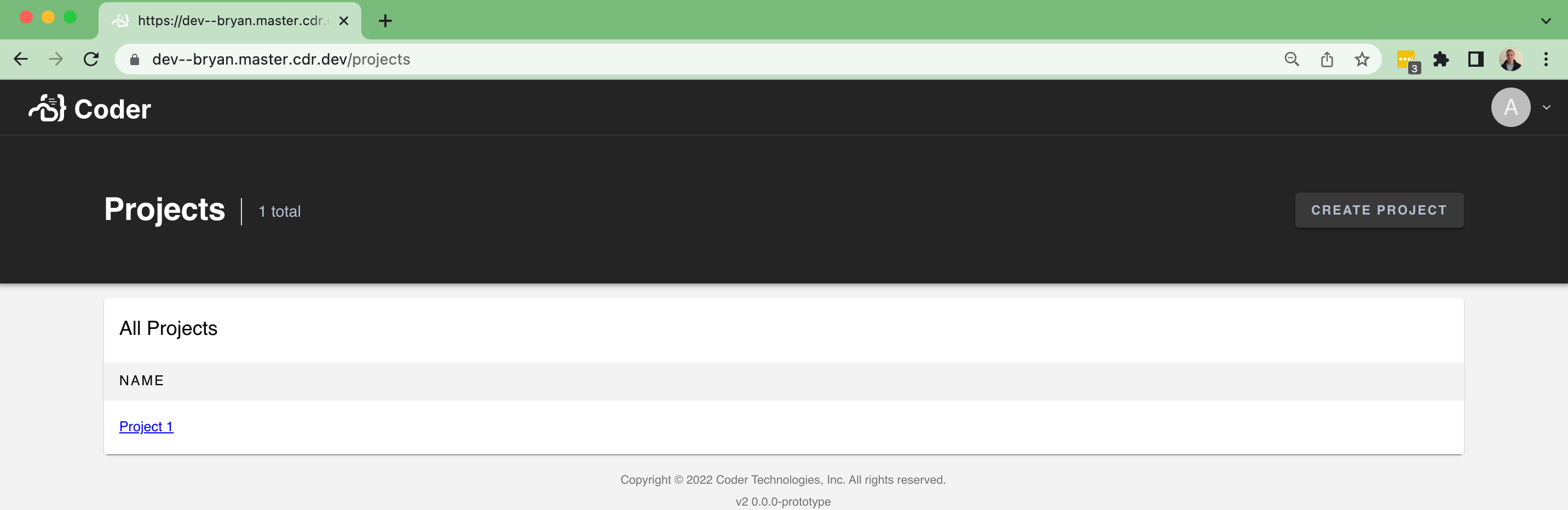
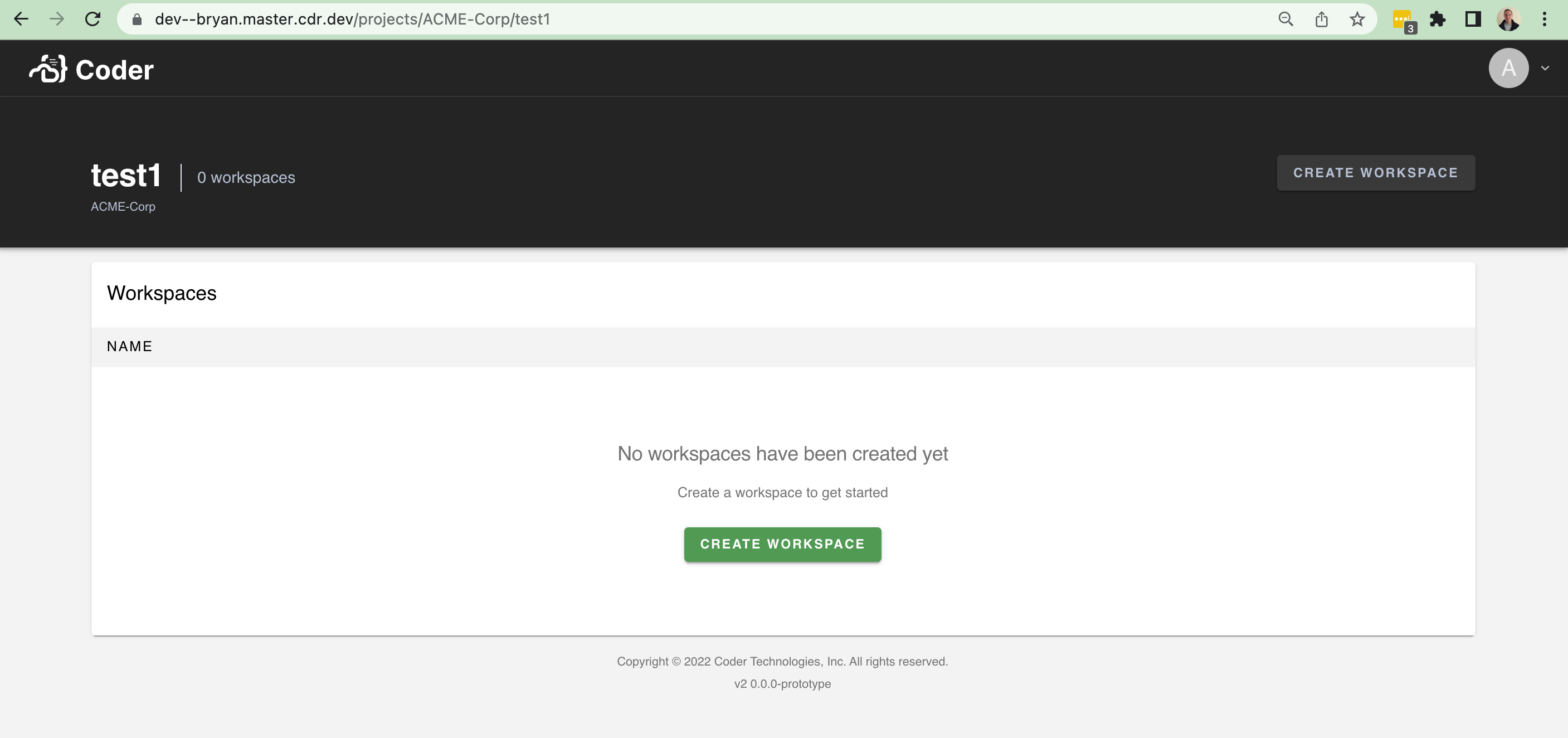
...and an empty state:
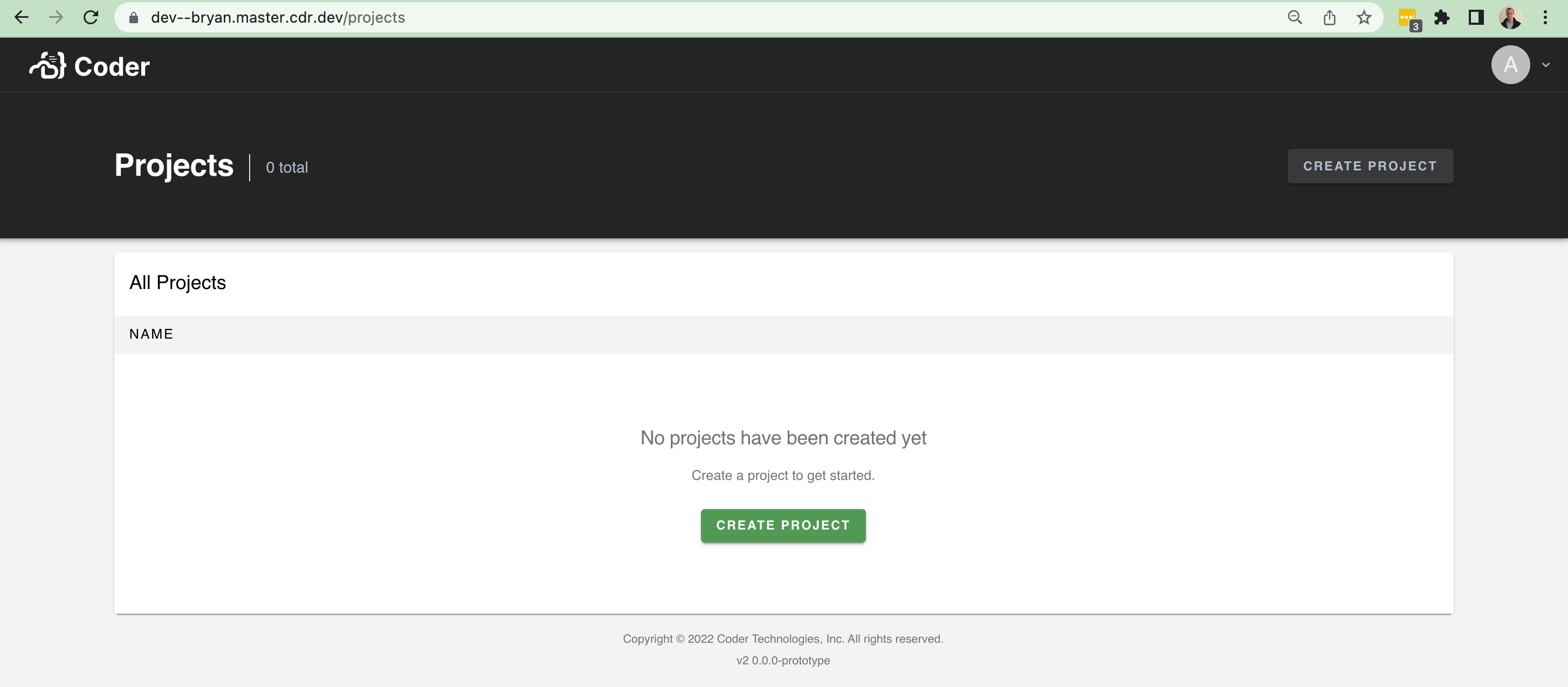
There isn't too much data to show at the moment. It'll be nice in the future to show the following fields and improve the UI with it:
- An icon
- A list of users using the project
- A description
However, this brings in a lot of scaffolding to make it easier to build pages like this (`/organizations`, `/workspaces`, etc).
In particular, I brought over a few things from v1:
- The `Hero` / `Header` component at the top of pages + sub-components
- A `Table` component for help rendering table-like UI + sub-components
- Additional palette settings that the `Hero`
#37 implemented the Sign-_in_ flow, but there wasn't a Sign-_out_ flow as part of that PR (aside from letting the cookie expire... or manually deleting the cookie...), which is obviously not ideal.
This PR implements a basic sign-out flow, along with a very simple user dropdown:
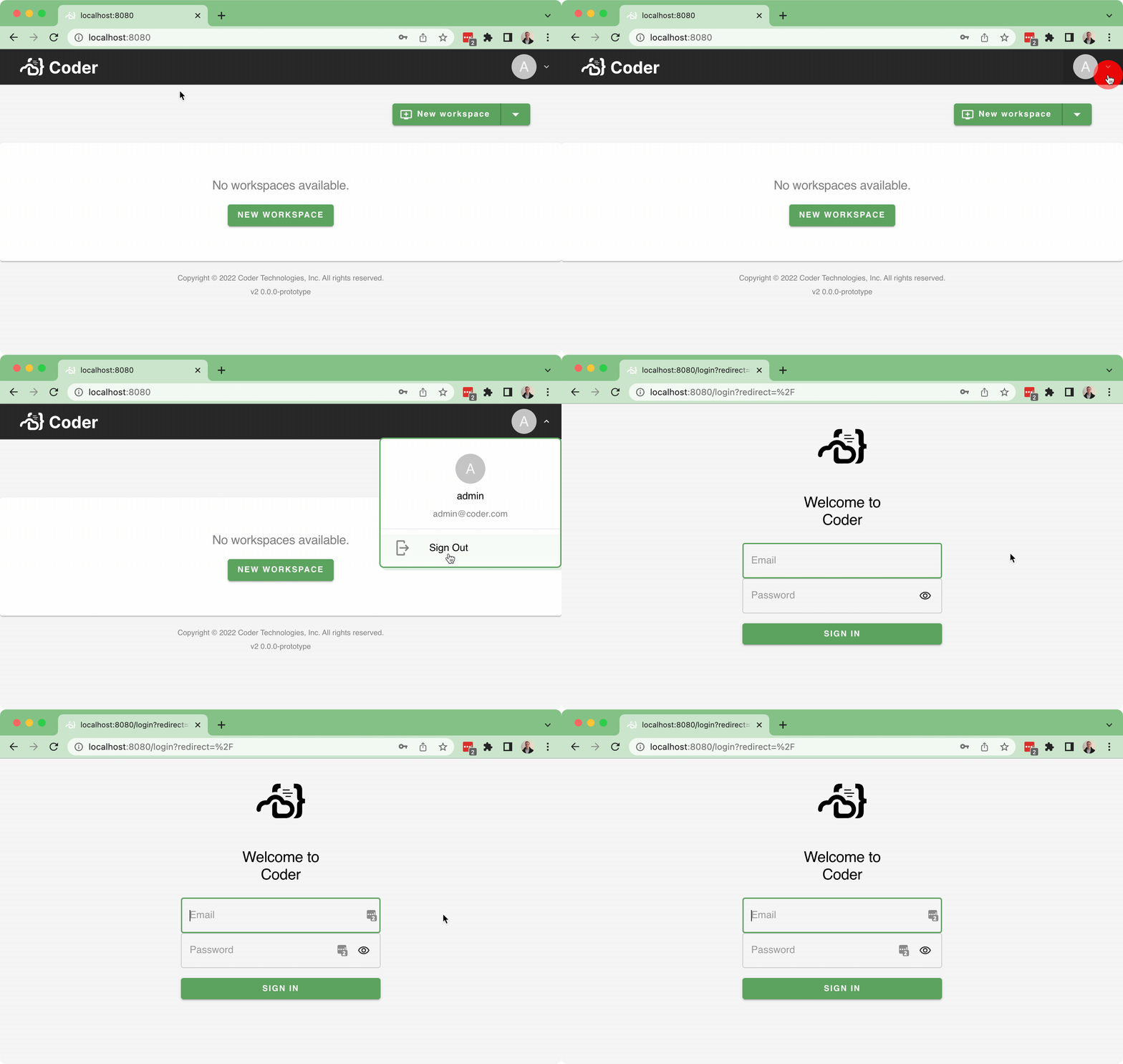
Bringing in a few pruned down components for the `<UserDropdown />` to integrate into the `<NavBar />`.
In addition, this also implements a simple back-end API for `/logout` which just clears the session token.
* feat: Add organizations endpoint for users

This moves the /user endpoint to /users/me instead. This
will reduce code duplication.

This adds /users/<name>/organizations to list organizations
a user has access to. It doesn't contain the permissions a
user has over the organizations, but that will come in a future
contribution.

* Fix requested changes

* Fix tests

* Fix timeout

* Add test for UserOrgs

* Add test for userparam getting

* Add test for NoUser
While I was testing the Sign-out functionality in #46 , I found a bug on login.
Sometimes, intermittently, the login wouldn't 'take' even though the login POST was successful and the subsequent GET to `/api/v2/user` was successful - the user would still be brought to the `/login` screen a second time:

^ I log-in, and then the login screen just resets, and logging in a second time works 🤔
I tracked this down and found it is a new race condition that I inadvertently introduced when I migrated to SWR in #46. Because SWR caches responses based on the API path - we have to invalidate the cache for `/api/v2/user` when the user logins, otherwise we'll continue to serve the user-not-found error until SWR decides to retry.
However, we weren't waiting for that cache-invalidation to go through - so there was the chance that an `/api/v2/user` request was still in-flight while we were redirecting after a successful login. If the request made it back prior to the redirect - login would work on the first try. If the request took longer - SWR would serve the stale, erroneous user from the cache.
Luckily the fix is simple - `mutate` in the SWR API returns a promise, so we can just wait for that to go through before redirecting. Unfortunately, though, this is tricky to exercise in a unit test because with the SWR model, the login logic is spread between `_app.tsx`, `UserContext.tsx`, and `SignInForm.tsx`, and the race condition involves an integration of all of those places.
I found that there is a lint rule that can help protect us from making this mistake - [`typescript-eslint/no-floating-promises`](https://github.com/typescript-eslint/typescript-eslint/blob/main/packages/eslint-plugin/docs/rules/no-floating-promises.md) (it's a lint rule we wanted to turn on in `coder/m`, too, actually - just a lot of work to clean up the code for it!), so I turned it on as part of this PR, and it caught a couple extra places to check.
This just implements a basic sign-in flow, using the new endpoints in #29 :

This brings over several dependencies that are necessary:
- `formik`
- `yep`
Ports over some v1 code to bootstrap it:
- `FormTextField`
- `PasswordField`
- `CoderIcon`
And implements basic sign-in:
Fixes#37Fixes#43
This does not implement it navbar integration (importantly - there is no way to sign out yet, unless you manually delete your `session_token`). I'll do that in the next PR - figured this was big enough to get reviewed.
* chore: Fix golangci-lint configuration and patch errors

Due to misconfiguration of a linting rules directory, our linter has not been
working properly. This change fixes the configuration issue, and all remaining
linting errors.

* Fix race in peer logging

* Fix race and return

* Lock on bufferred amount low

* Fix mutex lock
While starting on the create workspace flow - I noticed some weird CSS issues.
In particular, intermittently, the web UI would render like this:

...and when that happened, there'd be an accompanying error in the console:

The issue is that NextJS is trying to render the page on the server and use the styles - and sometimes the classnames mismatch between server-side and client-side rendering. We actually worked around this in `cdr/m` with a `<SafeHydration />` component and a custom `_document.tsx`
This change ports over both the component and custom `_document.tsx`. I noticed, in addition, I missed the favicons when switching to NextJS, so I brought those over too.
This change bundles the static assets like we have for v1 - using the [`embed`](https://pkg.go.dev/embed) go package. Fixes#22
In addition, it sets up a development script that runs `coderd` locally and serves the front-end, with hot-reloading. The script used is `./develop.sh`:

> NOTE: The UI is still placeholder, of course. Need to start testing out a simple, placeholder flow for the new v2 world as a next step
Summary of changes:
- Add build steps for `go` in the `Makefile`
- Add a step for production build, in which we use the `embed` tag
- Add a step for development, which doesn't need the `embed` tag - so we don't need to build the front-end twice
- Add `next export` build step to output front-end artifacts in `out`
- Add a `site` package for `go`
- Add `embed_static.go` and `embed.go`. This is mostly brought in as-is from v1, except removing some intercom/sentry CSP entries that we aren't using.
- Add a [next development server](https://nextjs.org/docs/advanced-features/custom-server)
- Add a `v2-dev` script, that runs `coderd` and the `next` dev server side-by-side
- Use the `site` package as the fallback handler.
- Add `.gitignore` entries for additional build collateral
 dependabot[bot]