#37 implemented the Sign-_in_ flow, but there wasn't a Sign-_out_ flow as part of that PR (aside from letting the cookie expire... or manually deleting the cookie...), which is obviously not ideal.
This PR implements a basic sign-out flow, along with a very simple user dropdown:
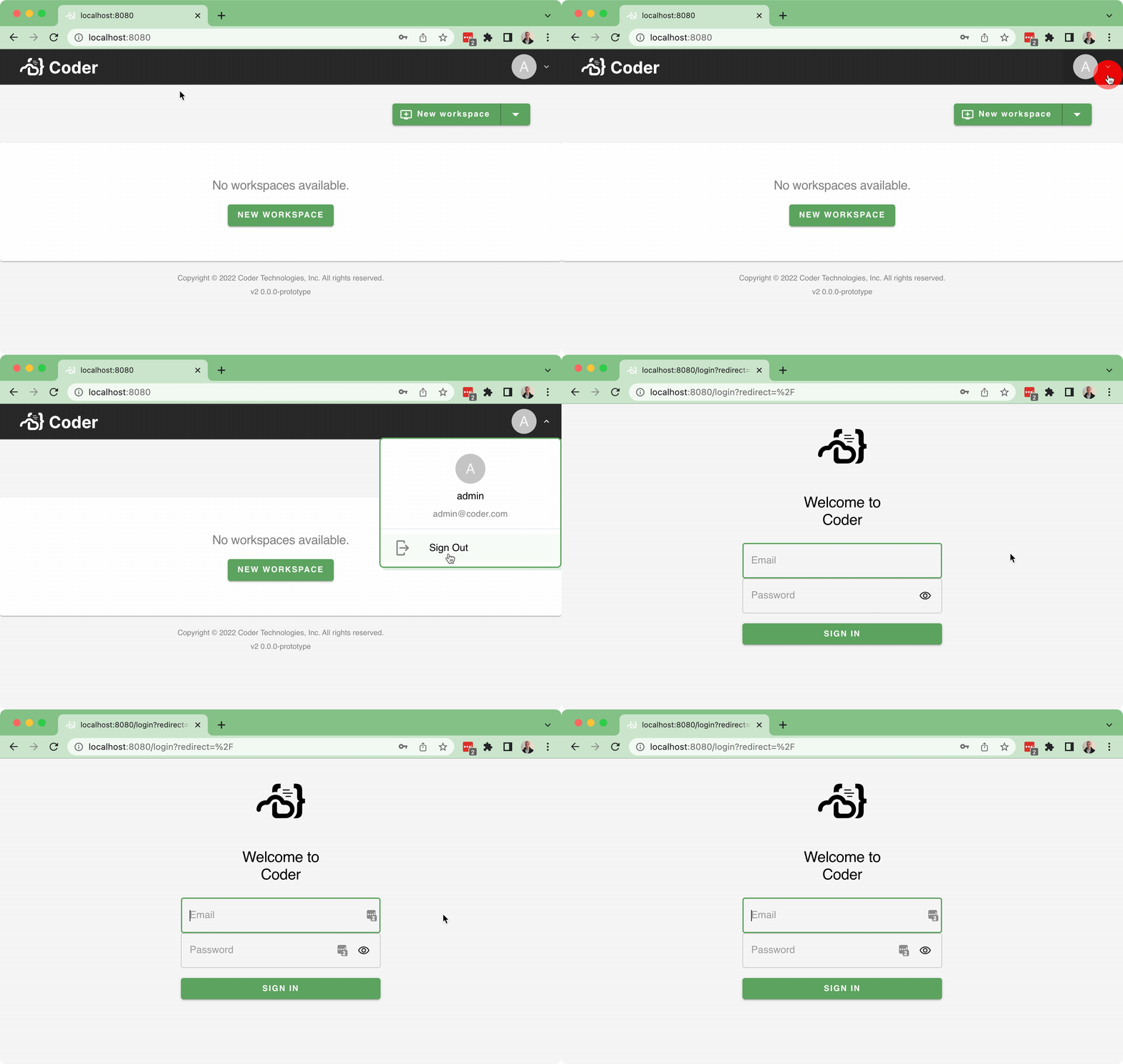
Bringing in a few pruned down components for the `<UserDropdown />` to integrate into the `<NavBar />`.
In addition, this also implements a simple back-end API for `/logout` which just clears the session token.
* feat: Add organizations endpoint for users

This moves the /user endpoint to /users/me instead. This
will reduce code duplication.

This adds /users/<name>/organizations to list organizations
a user has access to. It doesn't contain the permissions a
user has over the organizations, but that will come in a future
contribution.

* Fix requested changes

* Fix tests

* Fix timeout

* Add test for UserOrgs

* Add test for userparam getting

* Add test for NoUser
While I was testing the Sign-out functionality in #46 , I found a bug on login.
Sometimes, intermittently, the login wouldn't 'take' even though the login POST was successful and the subsequent GET to `/api/v2/user` was successful - the user would still be brought to the `/login` screen a second time:

^ I log-in, and then the login screen just resets, and logging in a second time works 🤔
I tracked this down and found it is a new race condition that I inadvertently introduced when I migrated to SWR in #46. Because SWR caches responses based on the API path - we have to invalidate the cache for `/api/v2/user` when the user logins, otherwise we'll continue to serve the user-not-found error until SWR decides to retry.
However, we weren't waiting for that cache-invalidation to go through - so there was the chance that an `/api/v2/user` request was still in-flight while we were redirecting after a successful login. If the request made it back prior to the redirect - login would work on the first try. If the request took longer - SWR would serve the stale, erroneous user from the cache.
Luckily the fix is simple - `mutate` in the SWR API returns a promise, so we can just wait for that to go through before redirecting. Unfortunately, though, this is tricky to exercise in a unit test because with the SWR model, the login logic is spread between `_app.tsx`, `UserContext.tsx`, and `SignInForm.tsx`, and the race condition involves an integration of all of those places.
I found that there is a lint rule that can help protect us from making this mistake - [`typescript-eslint/no-floating-promises`](https://github.com/typescript-eslint/typescript-eslint/blob/main/packages/eslint-plugin/docs/rules/no-floating-promises.md) (it's a lint rule we wanted to turn on in `coder/m`, too, actually - just a lot of work to clean up the code for it!), so I turned it on as part of this PR, and it caught a couple extra places to check.
This just implements a basic sign-in flow, using the new endpoints in #29 :

This brings over several dependencies that are necessary:
- `formik`
- `yep`
Ports over some v1 code to bootstrap it:
- `FormTextField`
- `PasswordField`
- `CoderIcon`
And implements basic sign-in:
Fixes#37Fixes#43
This does not implement it navbar integration (importantly - there is no way to sign out yet, unless you manually delete your `session_token`). I'll do that in the next PR - figured this was big enough to get reviewed.
 Bryan
Bryan


